
Madness and Rational Motive
The A.B.C. MurdersThis thread examines how the appearance of madness obscures a rational scheme and how Poirot distinguishes genuine mental illness from a performance.
increasing Bearing strength in each event
 decreasing
Bearing strength in each eventdecreasingThe Manic Appearance
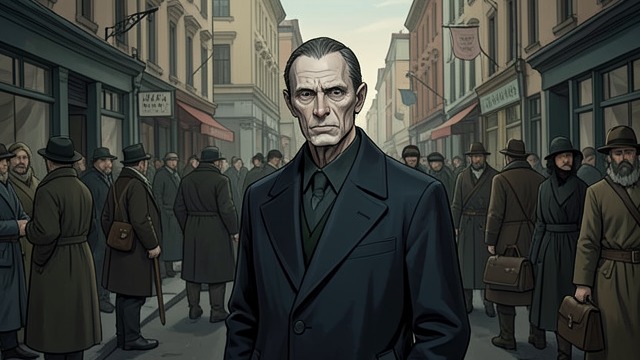
A Killer Called Mad
A plausible label
The warnings, dates, and railway guides suggest an obsessive murderer. Police and press increasingly treat madness as an explanation for the entire series.
A question remains
Poirot argues that even a deluded person follows an internal logic. The label does not explain why these victims were selected or why Poirot was addressed.
A Theory of Notoriety

The Need for Attention
Psychological account
Crome and Thompson believe the killer wants public recognition and may become careless. The theory explains the boastful letters and repeated staging.
Missing necessity
Poirot asks why a killer seeking only attention would create a risky series instead of simply murdering privately. The question points to a concealed beneficiary.
Cust’s Apparent Guilt

Illness and Suggestion
Epilepsy as vulnerability
Cust has seizures and memory lapses, making the idea of unconscious violence frighteningly plausible to him. His symptoms become part of the false case against him.
Belief is not proof
He sincerely accepts the planted evidence, but sincerity cannot establish authorship. Poirot recognizes that the accused man is suggestible rather than calculating.
The Letters Reread

Madness Was Imitated
A sane performance
Poirot rereads the letters and recognizes the careful design beneath their schoolboy taunts. Their supposed irrationality is itself a disguise.
Motive takes precedence
The scheme is not a simple compulsion to kill. It is a rational plot using an invented maniac to conceal Franklin’s personal murder.
Responsibility Restored

A Person Behind the Mask
Franklin’s choices
Franklin’s actions are deliberate and organized, despite his false serial-killer persona. The revelations restore moral responsibility to the crime.
Cust’s distinction
Cust is a victim of manipulation, even though he believes himself guilty. The difference between illness, suggestion, and intention becomes essential to justice.
After the first murder
After the Churston murder
After September 11, 1935
During Poirot’s final analysis
At the final confrontation
